UV inks and varnishes do not dry by evaporation. They stay liquid on the press until UV light polymerises them, then they are cured within a fraction of a second as the substrate passes the lamp. Printers use them for sharp dots, high gloss and immediate handling, on paper, board, films, plastics and metal.
Where UV LED curing is used
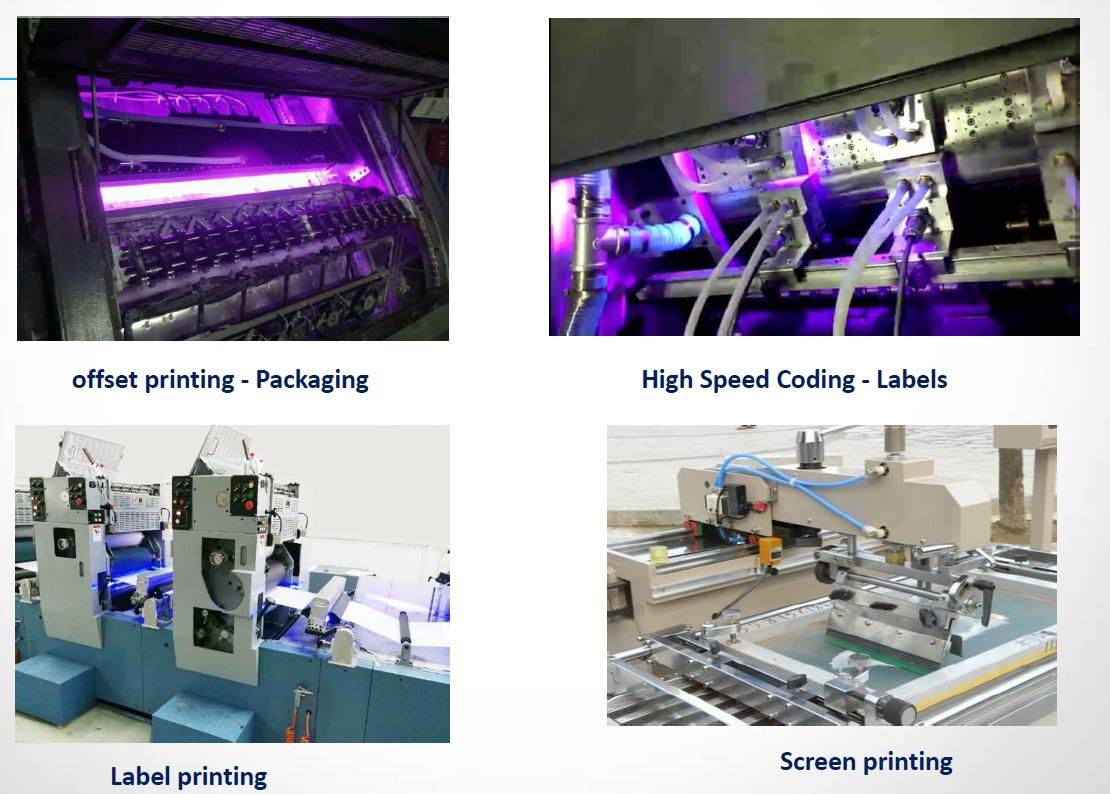
- Inkjet printing: pinning and full curing on wide-format, single-pass and industrial inkjet systems, where LED lamps ride on the print carriage or sit across the web.
- Label and narrow-web printing: curing inks and varnishes between print stations on flexo and hybrid label presses.
- Coding and marking: curing codes and variable data on labels and packaging at high line speeds.
- Screen printing: curing thick ink layers on plastics, glass, panels and electronic parts.
- Offset printing: curing sheet-fed and web-offset inks for packaging and commercial work.
- Exposure: imaging of printed circuit and screen printing photoresists, where LEDs have largely replaced mercury lamps.
Why UV LED suits printing
No warm-up, no shutters. LEDs reach full output immediately and switch off between jobs or between sheets, so there is no standby burn and no shutter mechanics to maintain.
Low heat on thin substrates. LED lamps emit no infrared, so far less heat reaches the substrate than with a mercury lamp. Thin films, shrink sleeves and heat-sensitive labels stay flat and register stays stable.
No ozone, no mercury. LED lamps produce no ozone, so no exhaust ducting is needed, and there is no mercury to handle or dispose of.
Long, stable life. LED output declines slowly over tens of thousands of hours, compared with a mercury bulb that needs regular replacement and gradually loses intensity.
Wavelength and ink
Printing with UV LEDs mainly uses 365, 385 and 395 nm sources. LEDs emit a narrow band, while a mercury lamp emits across the UV-C, UV-B and UV-A ranges. Inks and varnishes must therefore contain photoinitiators that absorb at the LED's wavelength: ink makers offer LED-curable series for this purpose.
The short wavelengths of a mercury lamp help cure the very top of a layer, where oxygen inhibits polymerisation. With LEDs, a tack-free surface relies on LED-optimised ink, sufficient irradiance and, on some presses, inerting. Test your inks under the intended lamp before converting a press.
Choosing a system
- Print width. Choose a lamp at least as wide as the printed area. Linear and area sources are available from short heads up to 1,350 mm.
- Line speed and dose. The dose is the irradiance multiplied by the time a point spends under the lamp. Doubling the line speed halves the dose, so fast presses need higher irradiance, a wider irradiated length or several lamps in a row.
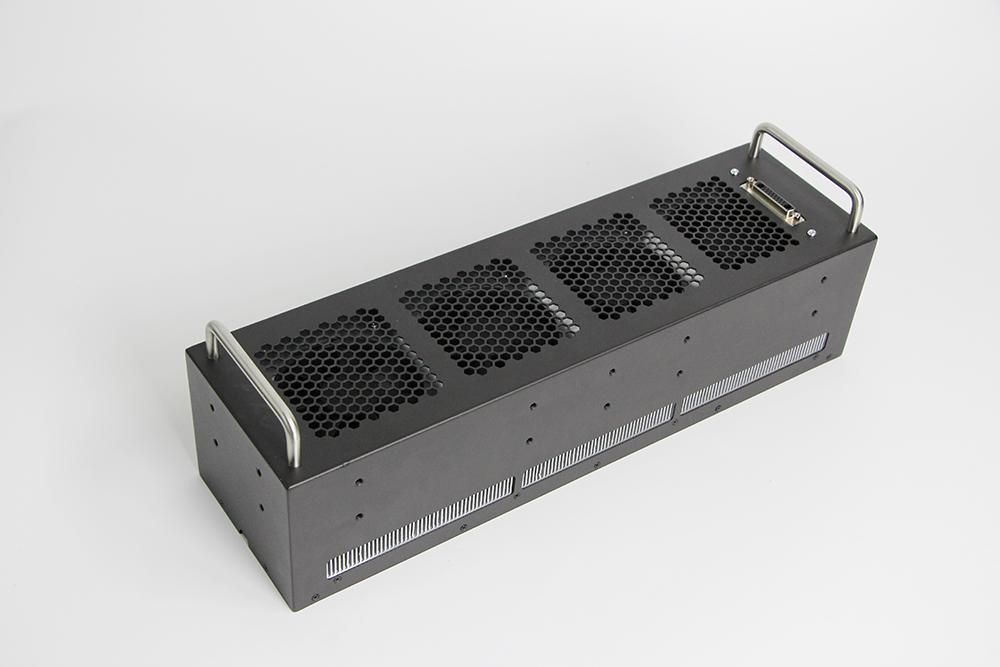
- Cooling. Fan-cooled lamps are compact and simple to install. Water-cooled lamps reach higher irradiance, from 6 to 25 W/cm², and keep heat away from the press.
- Working distance. Irradiance falls as the gap between lamp and substrate grows. Plan the mounting so the lamp sits as close to the substrate as the press allows.
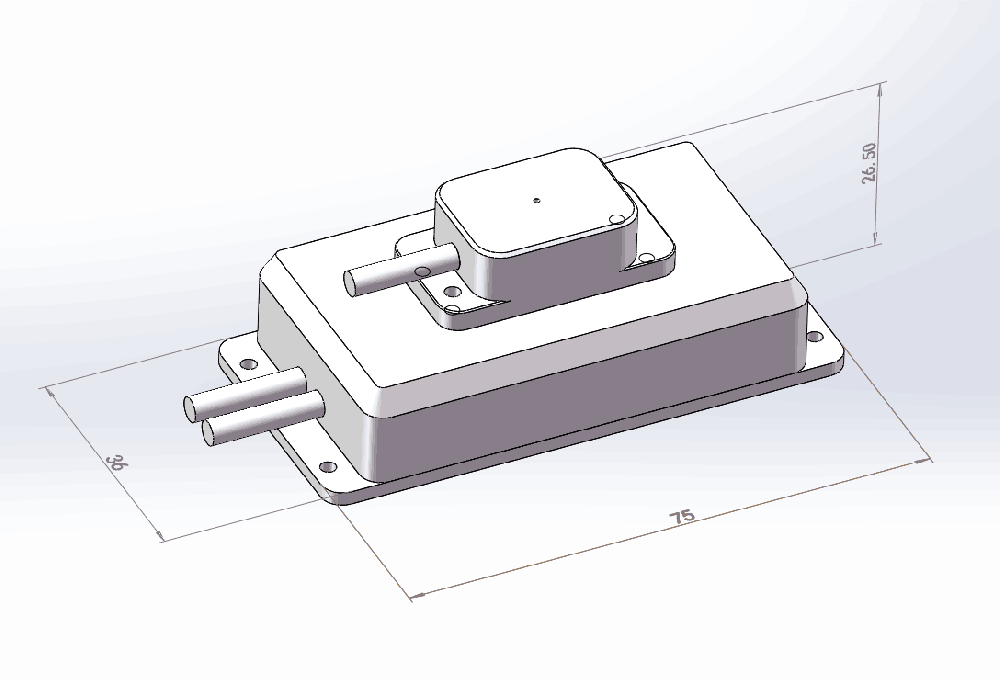
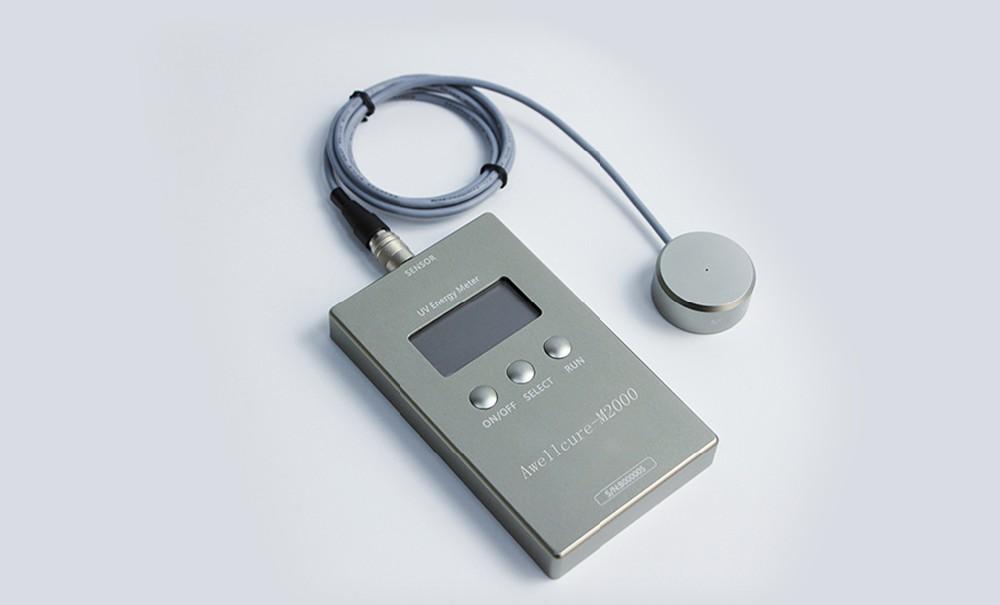
- Monitoring. An inline UV sensor reports lamp output continuously to the press controller; a handheld radiometer verifies dose during setup.
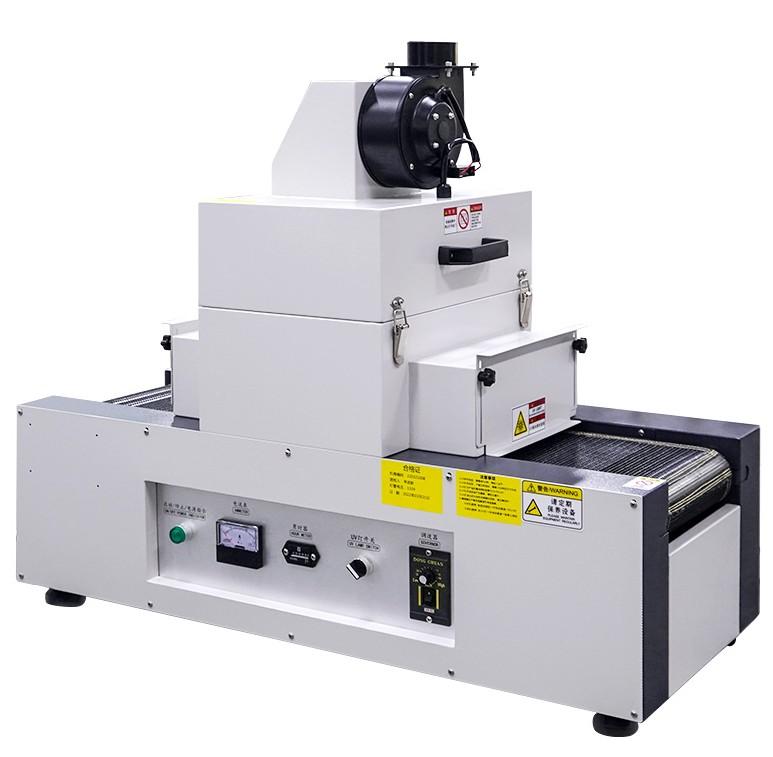
- Mercury where needed. For inks and varnishes formulated only for broad-spectrum lamps, a mercury conveyor remains an option.
Recommended systems
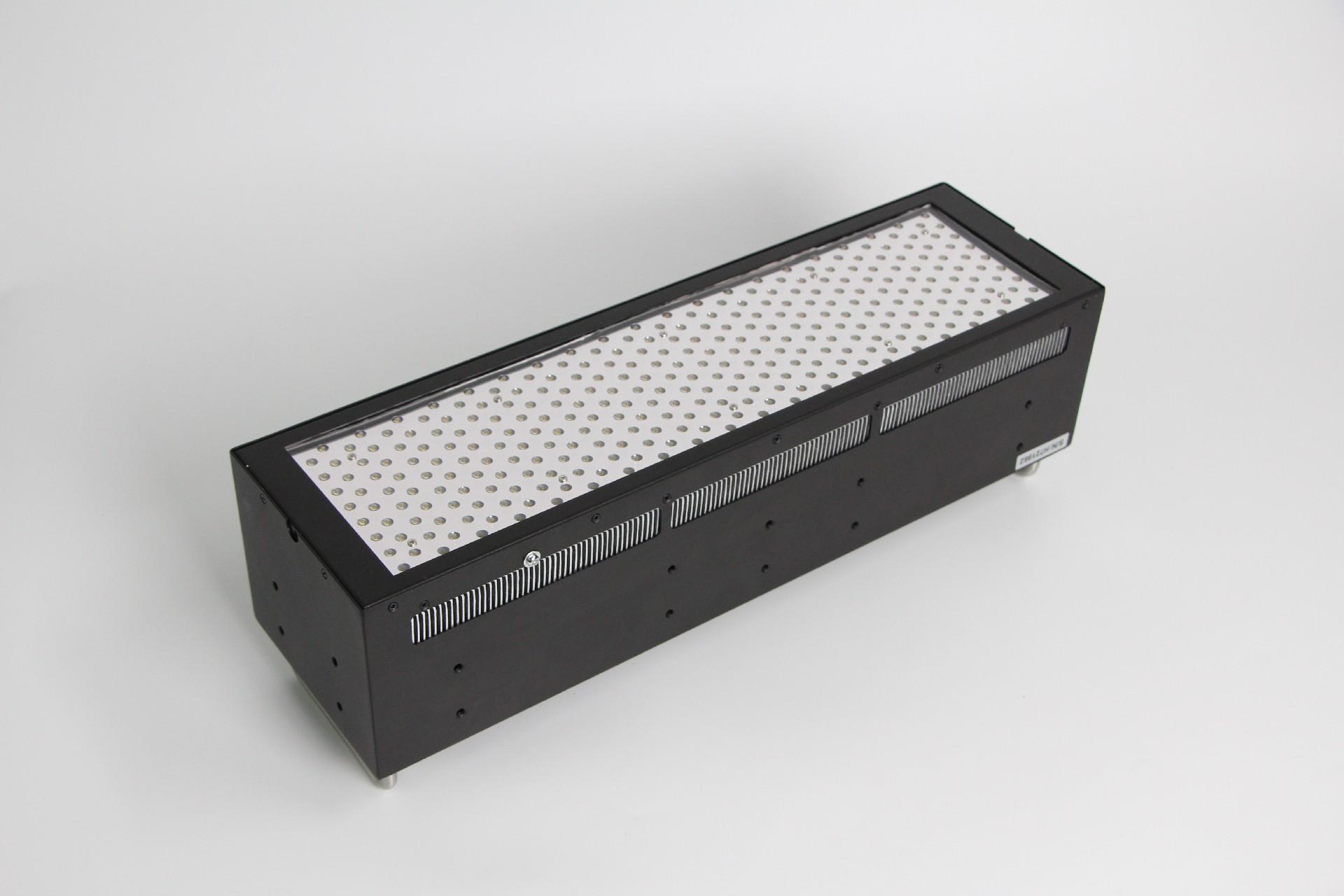
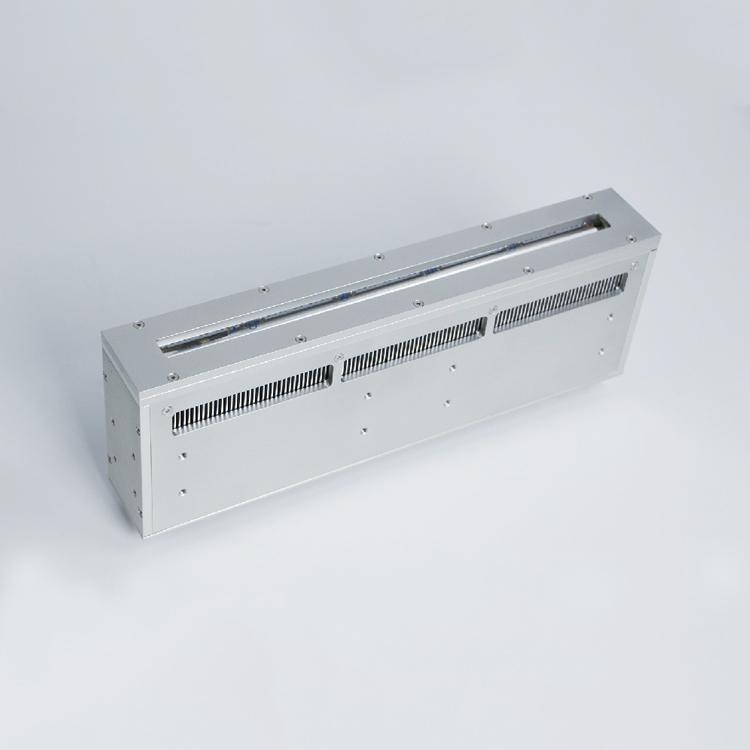
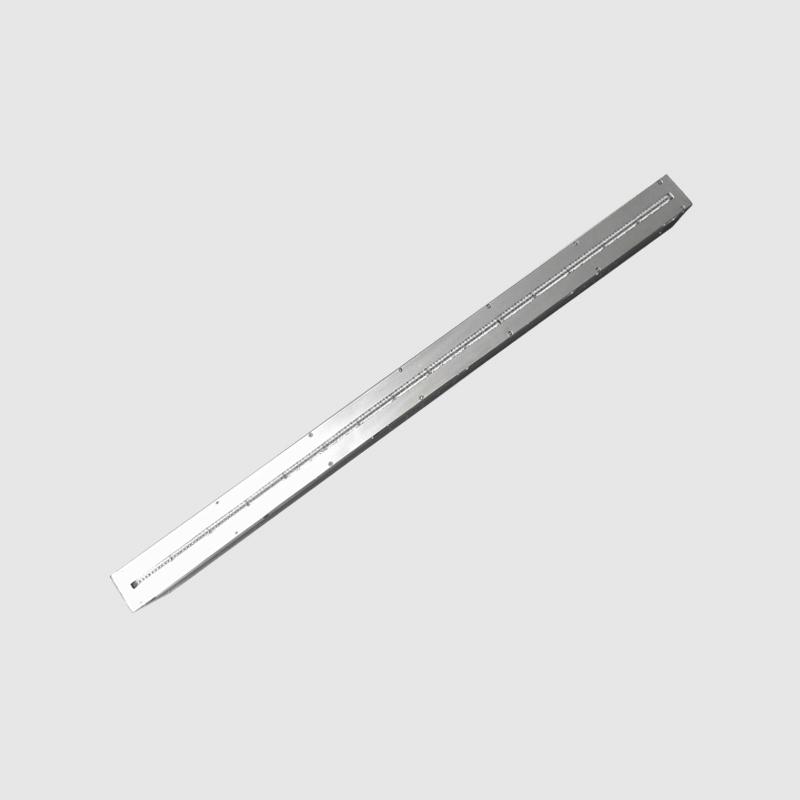
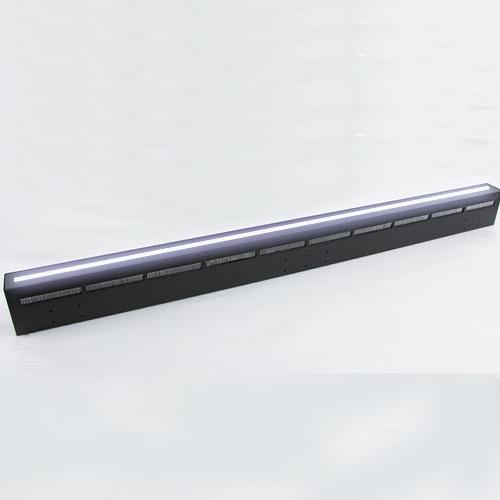
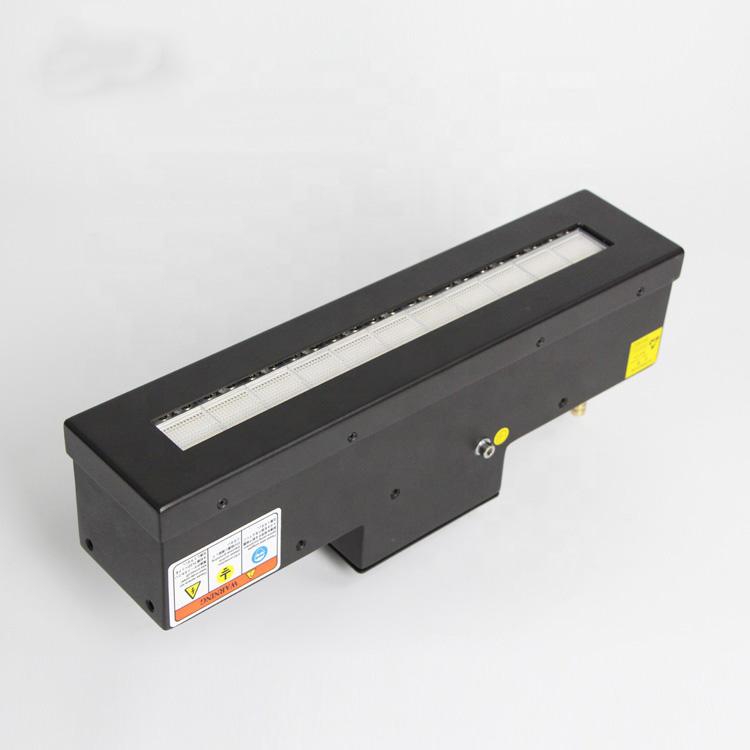
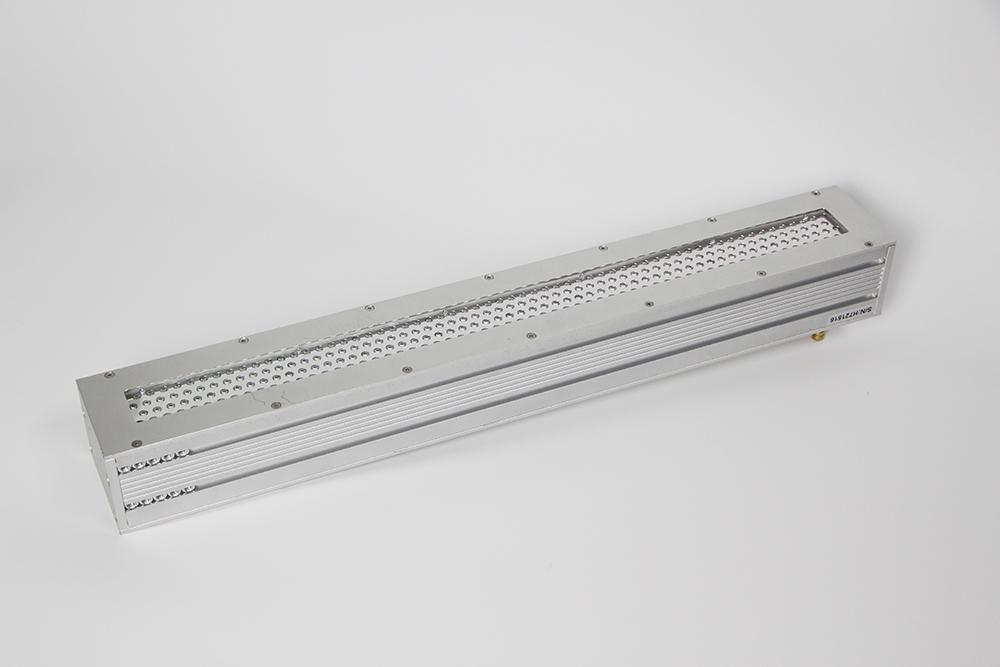
Fan-cooled UV LED Linear sources from 300 to 1,350 mm and wide UV LED Area sources cover the print width. For the highest irradiance, choose a water-cooled area source such as 20 × 280 mm or 20 × 600 mm. The 400 mm UV Conveyor with a mercury lamp cures sheets and parts with conventional UV inks. Monitor the process with the online UV Radiometer M4100, or verify it with a handheld meter. The linear curing guide explains how irradiance, dose and line speed relate.