Optical assemblies are held together by thin layers of UV-curable adhesive and optical cement. The adhesive stays liquid while the elements are aligned, then fixes them in seconds once the light is switched on. How evenly and how gently it cures decides whether the assembly keeps its alignment and optical quality.
What is cured
- Lens-to-barrel bonding: fixing single lenses and lens groups in metal or plastic barrels and holders.
- Cemented elements: doublets, triplets and other cemented lenses, bonded with optical cement across the full aperture.
- Prisms, mirrors and filters: bonding to each other and to mounts in instruments and sensor assemblies.
- Camera lenses and modules: lens stacks for security, automotive and consumer cameras, often tacked after active alignment.
- Fibre optic components: collimators, lens arrays and fibre-to-lens bonds.
- Instrument assembly: precision components of microscopes, image analysers, chemical sensors and infrared spectrometers.
Why UV LED suits optics
Alignment before cure. Elements can be positioned and adjusted for as long as needed, then fixed on command. Short, defined exposure times keep cycle times predictable.
Controlled stress. Every adhesive shrinks as it cures, and fast, uneven curing can pull elements out of position or introduce stress birefringence. With UV LED controllers you can set intensity precisely, and step or pulse modes let the adhesive gel gently before full cure.
Low heat. The LEDs emit no infrared, so lenses, plastic barrels and mounts see far less radiant heat than under a mercury lamp. That reduces thermal expansion during curing and the resulting shift in alignment.
Clean process. UV adhesives are typically solvent-free, and LED sources produce no ozone, so there are no fumes to extract near sensitive optical surfaces.
Choosing a system
- Wavelength and transmission. Light often has to pass through a lens or a plastic part before it reaches the adhesive. Polycarbonate and many UV-stabilised plastics absorb strongly at shorter UV-A wavelengths, so curing through them usually needs 395 or 405 nm and an adhesive that reacts at that wavelength. Check the transmission of every layer in the light path.
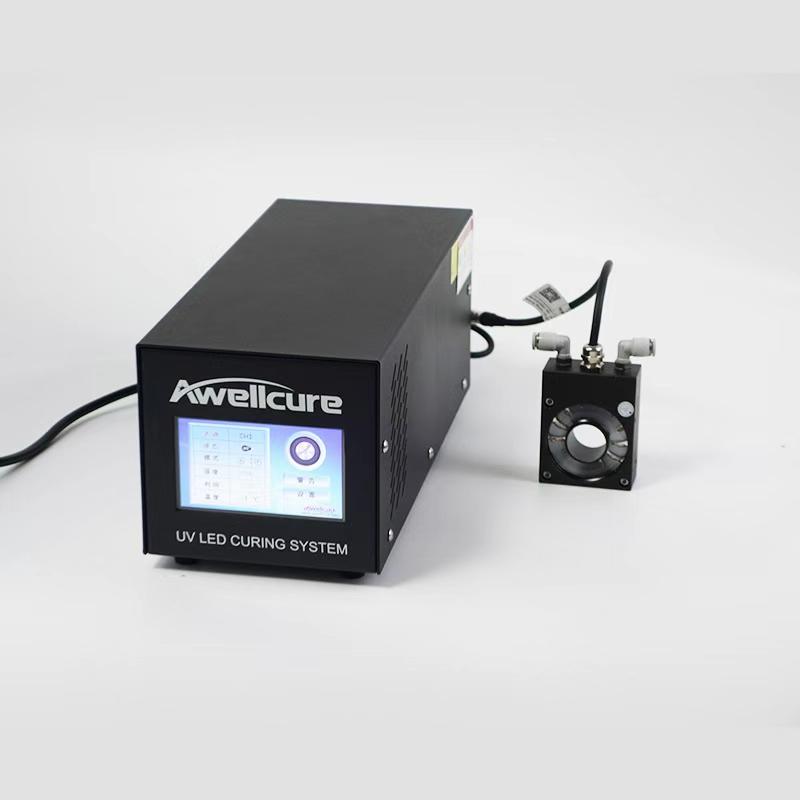
- Curing geometry. Dispensed dots at the edge of a lens suit spot heads, with one head per bonding point fired at the same time. Cemented elements and larger optics suit a small area source that covers the whole bond. Round parts such as barrels and collimators can be irradiated evenly from all sides with a ring LED lamp.
- Irradiance profile. For cemented optics, uniformity across the aperture matters more than peak irradiance. For tacking, a high-intensity spot shortens the cycle.
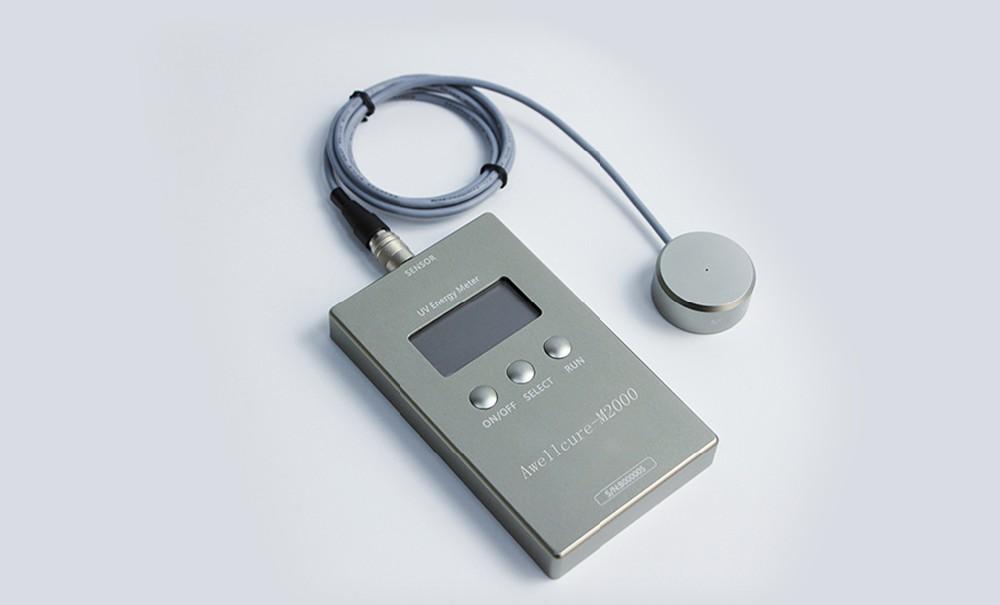
- Process control. Look for adjustable intensity in fine steps, step irradiation, external triggering from the alignment station and a parameter lock. Measure irradiance at the part with a radiometer when setting up and at regular intervals.
Recommended systems
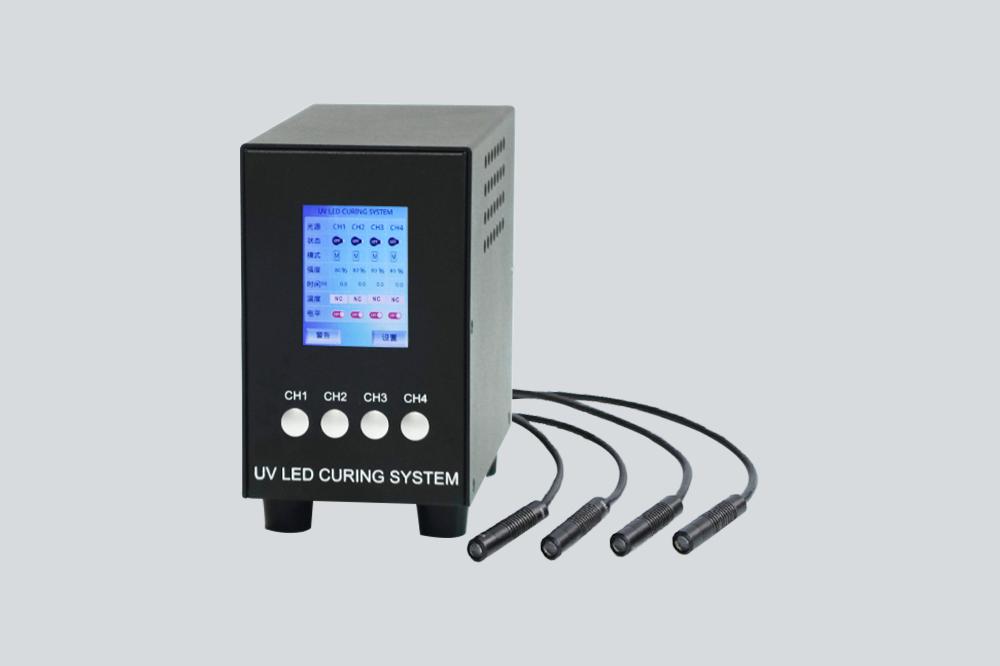
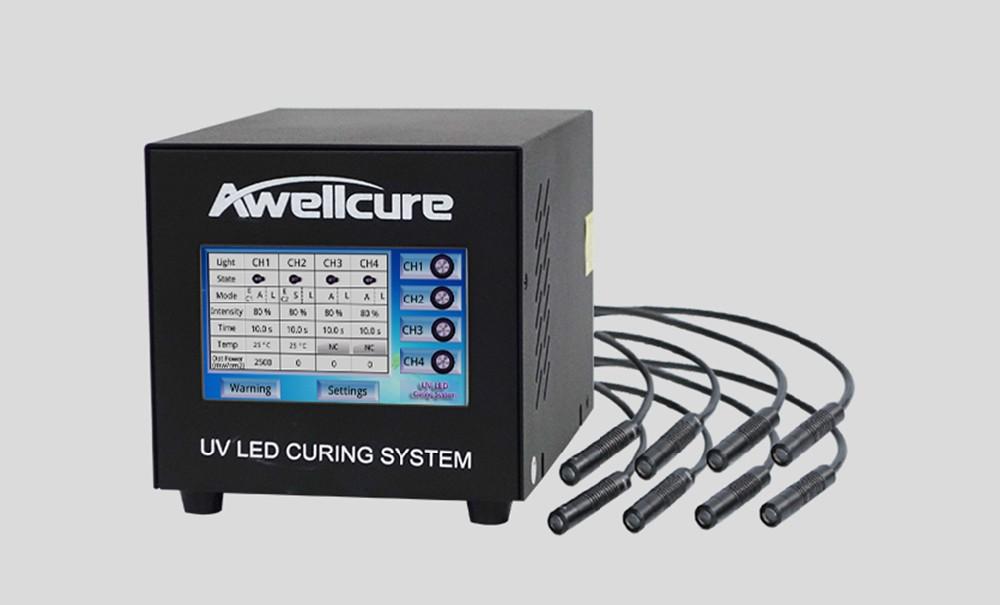
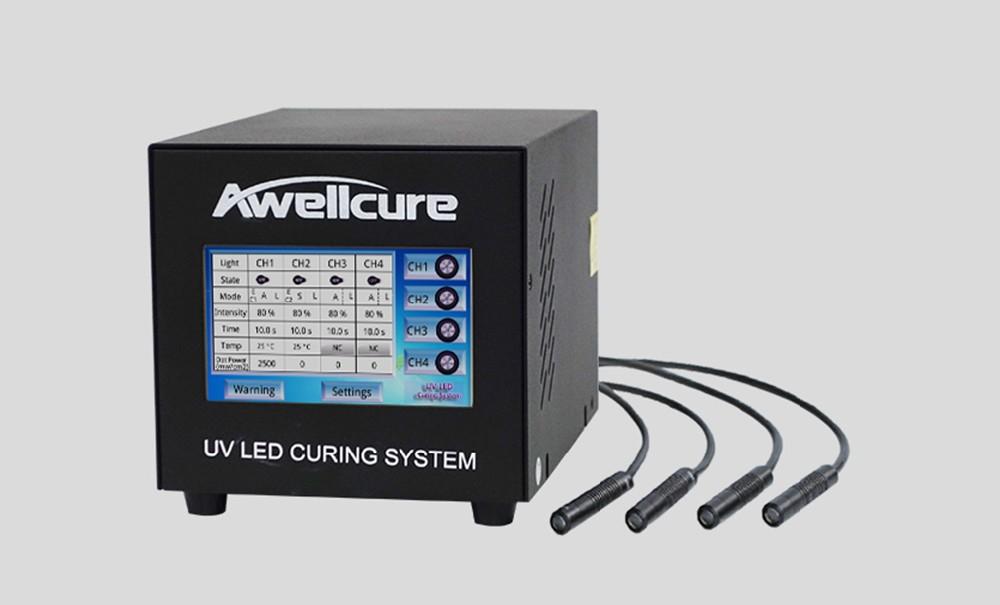
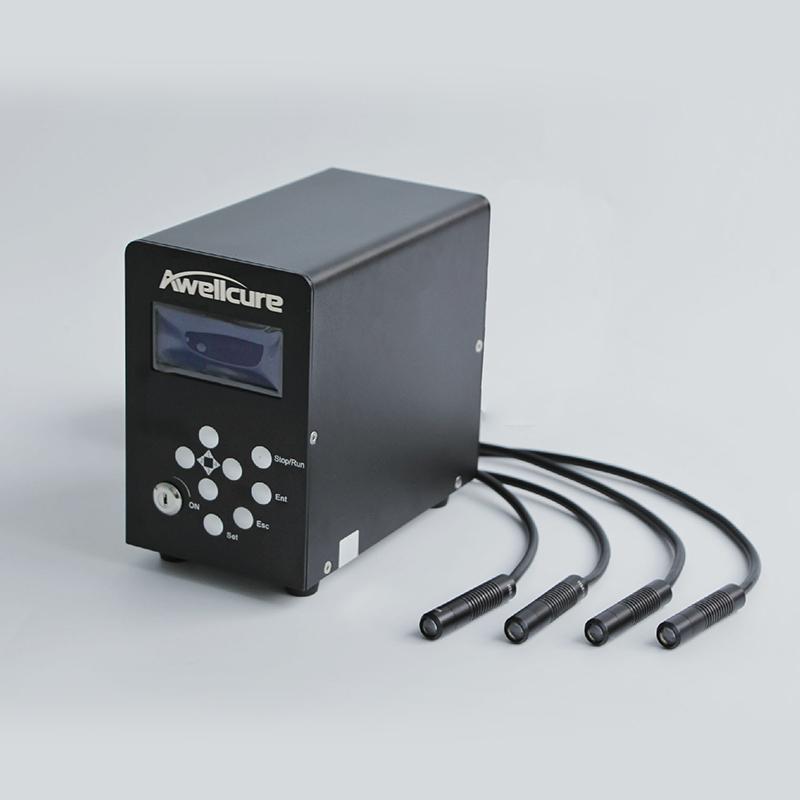
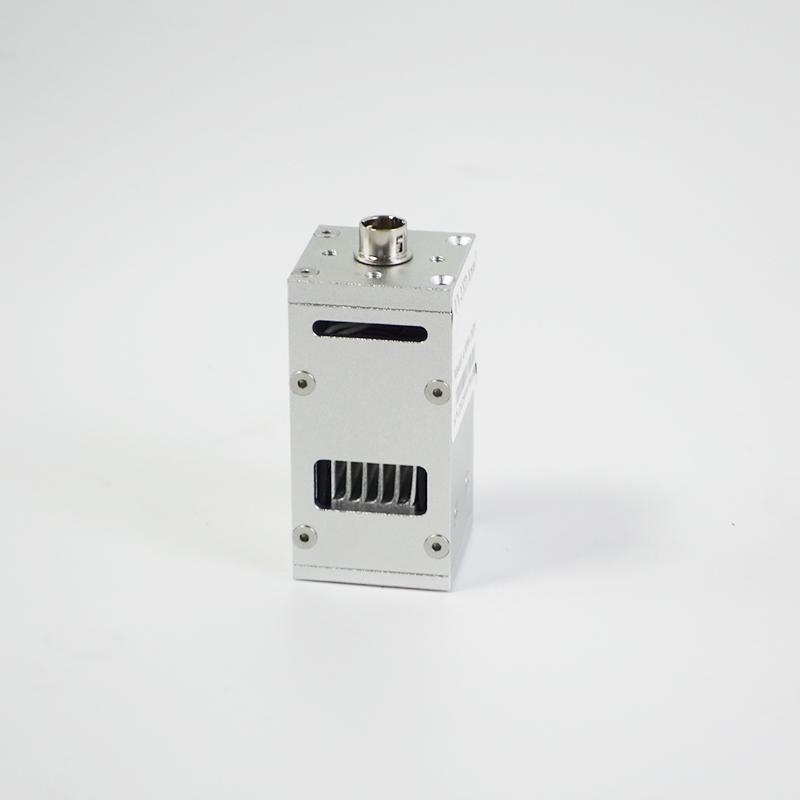
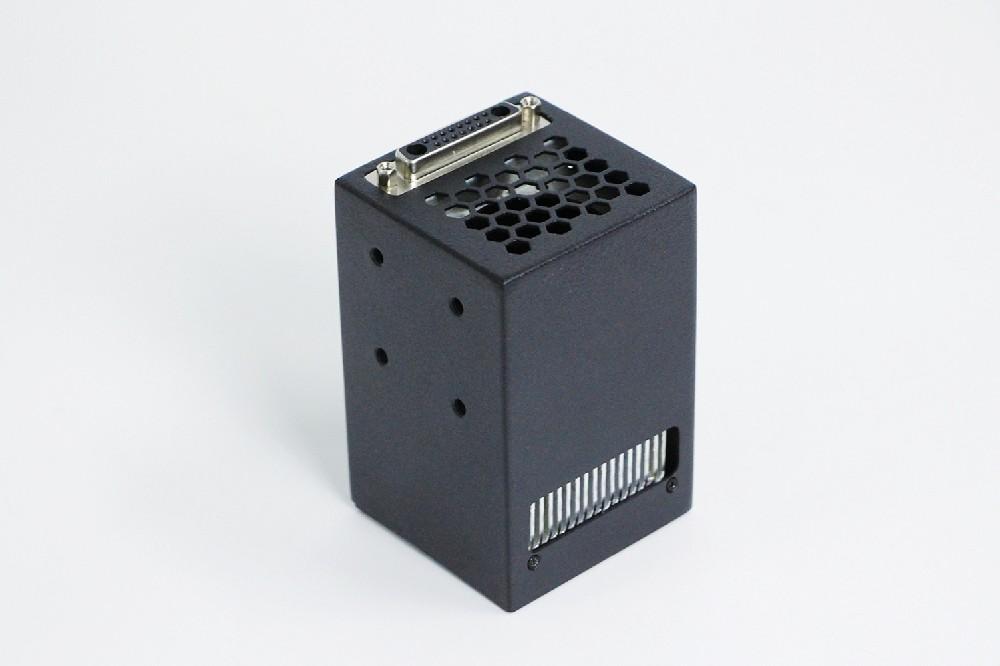
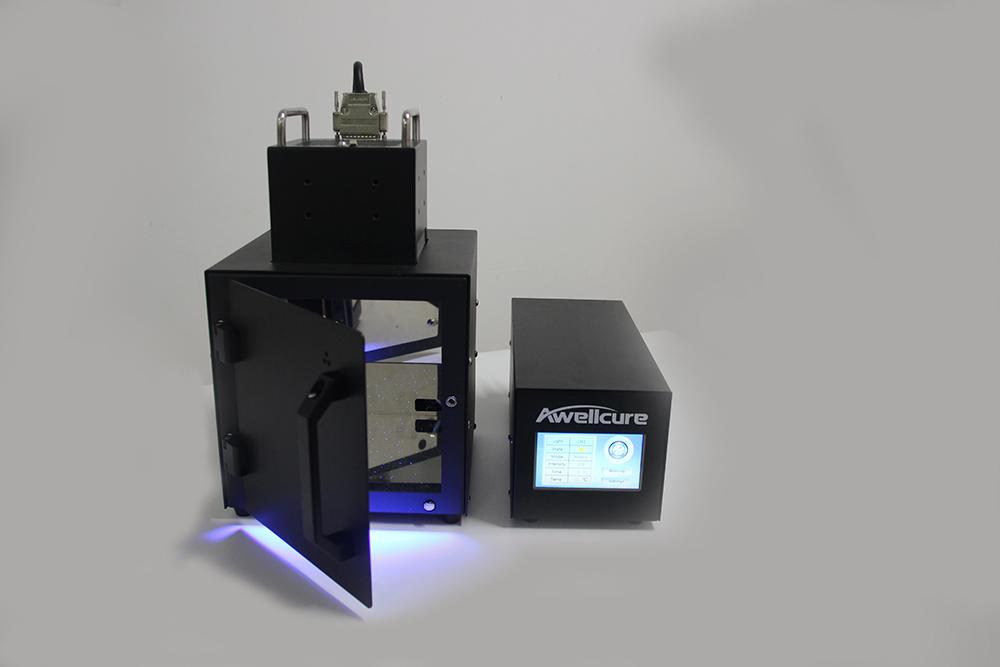
The UV LED Spot systems give up to eight independently controlled points, with lenses from 2 to 15 mm and step and pulse modes. The UV LED Area sources of 20 × 20 mm and 30 × 50 mm cover cemented elements and small lens groups, while the ring LED lamp cures cylindrical parts without rotating them. A UV Curing Oven suits batch post-curing and laboratory samples. For background on optics, working distance and dose, read the spot curing guide.