Fibre optic networks depend on components in which glass fibres, lenses and chips are aligned to within micrometres and then fixed permanently. UV-curable adhesives make that possible: they stay liquid during alignment and set in seconds when irradiated. The same chemistry is used for the coloured coatings and protective layers on the fibre itself.
What is cured
- Fibre arrays and V-grooves: fixing fibres in V-groove substrates and bonding lids for fibre arrays and planar lightwave circuit (PLC) splitters.
- Transceiver and active optics: tacking lenses, isolators and fibre stubs after active alignment in optical transceivers and modules.
- Connectors and patch cords: strain relief, boot bonding and fixing fibres in connector housings with UV-curable adhesives.
- Fibre coatings: colour coatings for fibre identification and matrix materials for fibre ribbons, cured as the fibre runs past the lamp.
- Splice protection: recoating stripped fibre after fusion splicing.
- Passive components: couplers, wavelength division multiplexers (WDM) and fibre collimators.
Why UV LED suits fibre components
Alignment stays put. Adhesives cure fast and with little heat, so components hold the position found during alignment. The LEDs emit no infrared, which limits thermal expansion of fixtures and parts while the bond sets.
High irradiance in a small area. Spot heads and compact linear sources concentrate their output on the bond line, so tack curing takes seconds and the next alignment can start.
Instant on and off. Exposure is triggered directly from the alignment or test station. There is no warm-up and no shutter, and the LEDs draw no power between cycles.
Stable output. LED output is steady from shot to shot and declines only slowly, so a validated dose stays valid. Temperature protection and fault alarms on the controller flag a problem before it affects parts.
Choosing a system
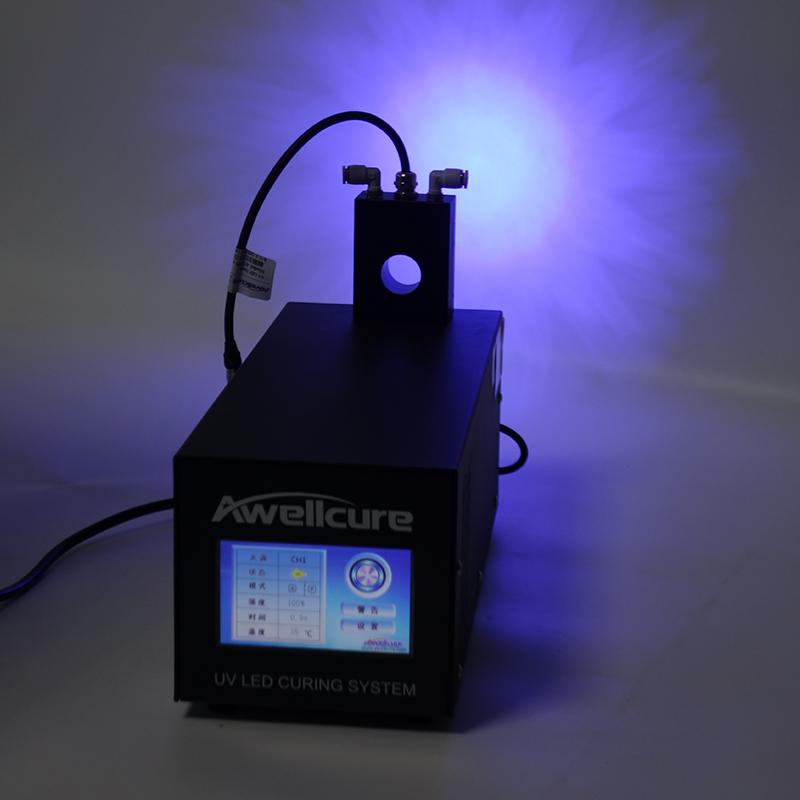
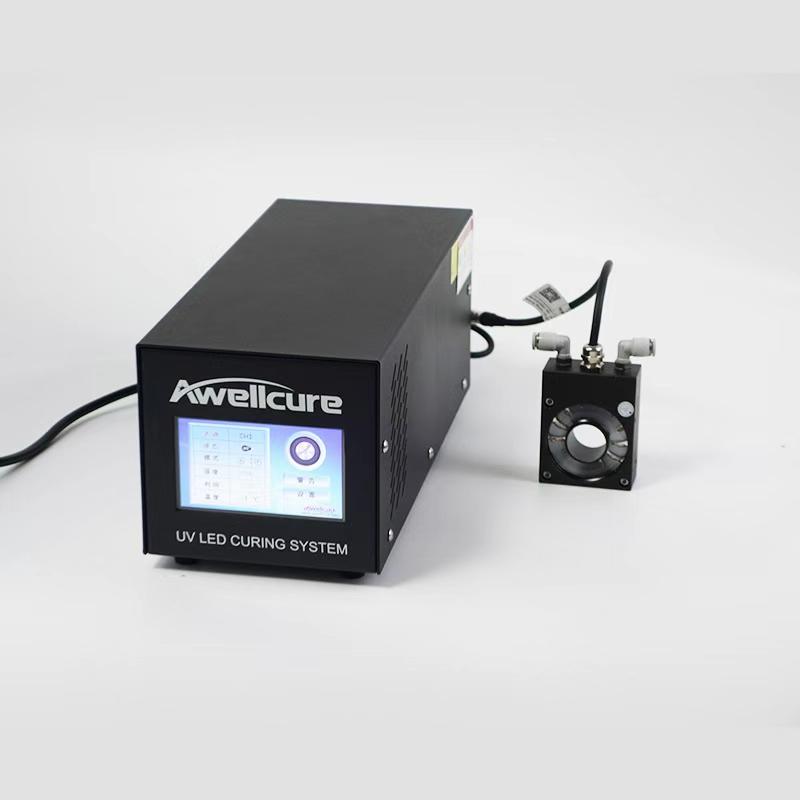
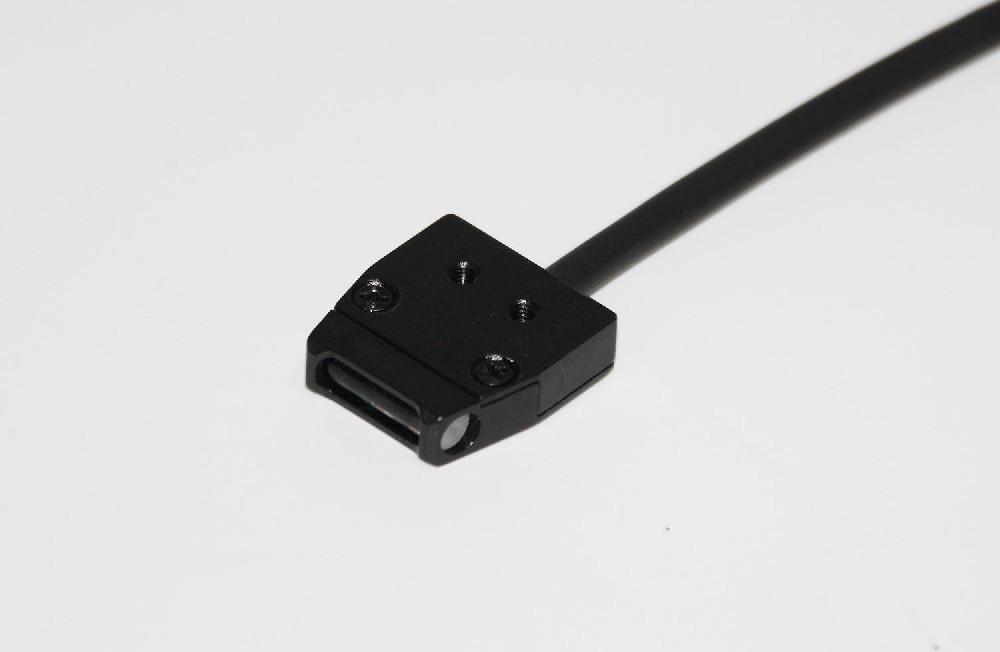
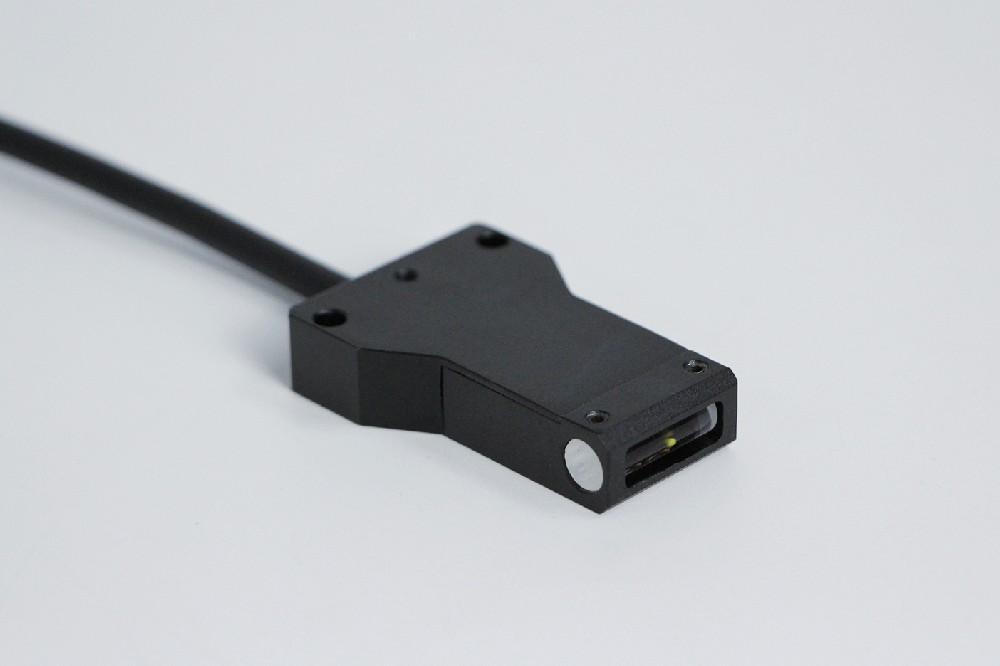
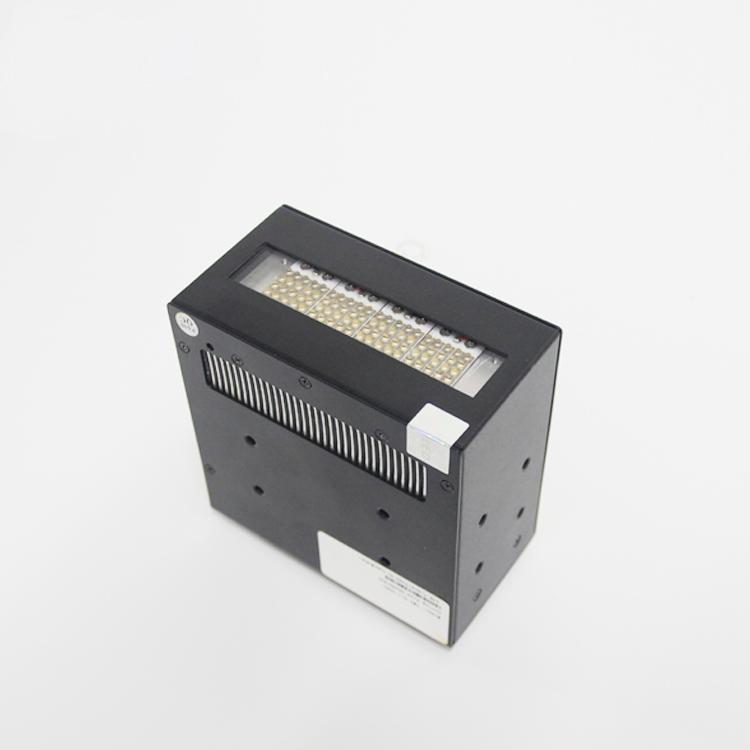
- Geometry. Single bond points on a module suit spot heads. A row of fibres in a V-groove suits a narrow linear source such as 10 × 3 mm or 15 × 5 mm. A fibre, tube or cable that passes through the light suits a ring LED lamp, which irradiates it evenly from all sides without rotating it.
- Wavelength. Match the adhesive or coating. Fibre component adhesives are commonly formulated for 365 nm; check whether your material is approved for LED wavelengths before changing from a mercury lamp.
- Dose and line speed. For moving fibre, the dose depends on irradiance and on the time the fibre spends in the light. Faster lines need more irradiance or a longer irradiated length.
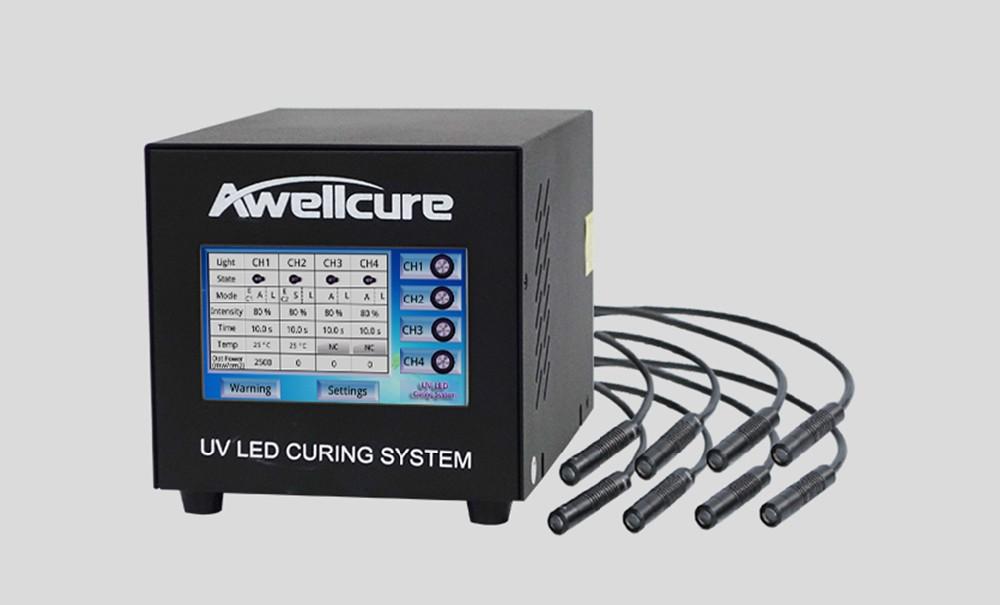
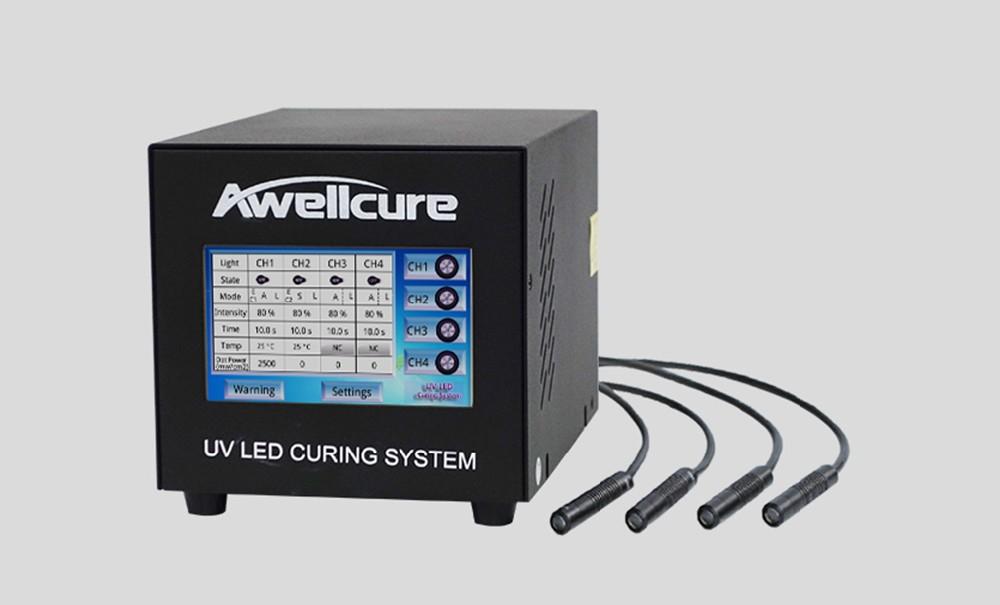
- Integration. Check I/O triggering from the alignment station, the head size and cable length for your fixture, and whether you need several curing points from one controller.
Recommended systems
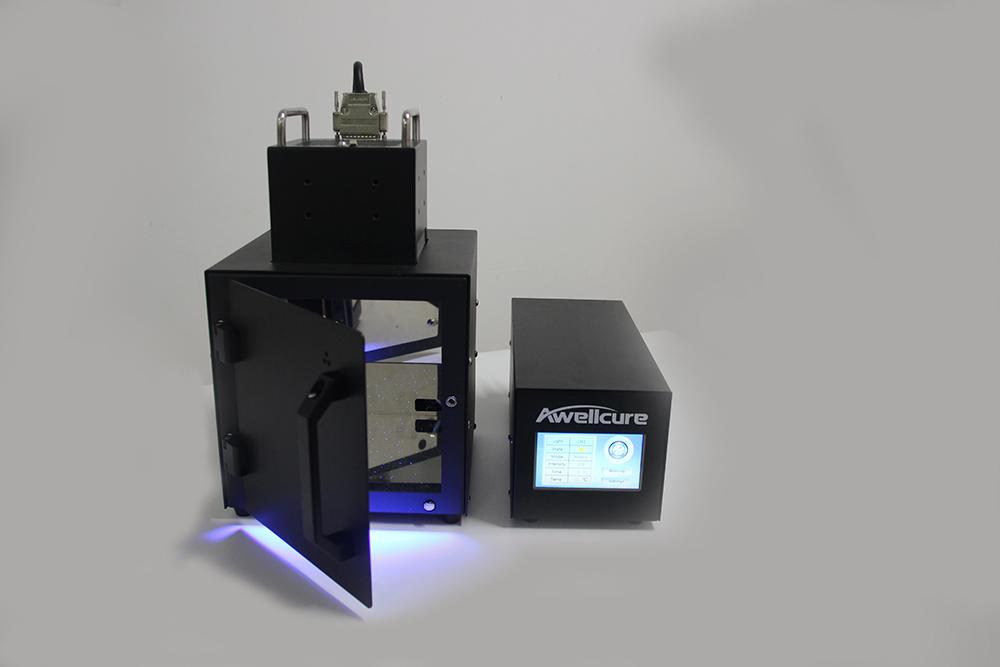
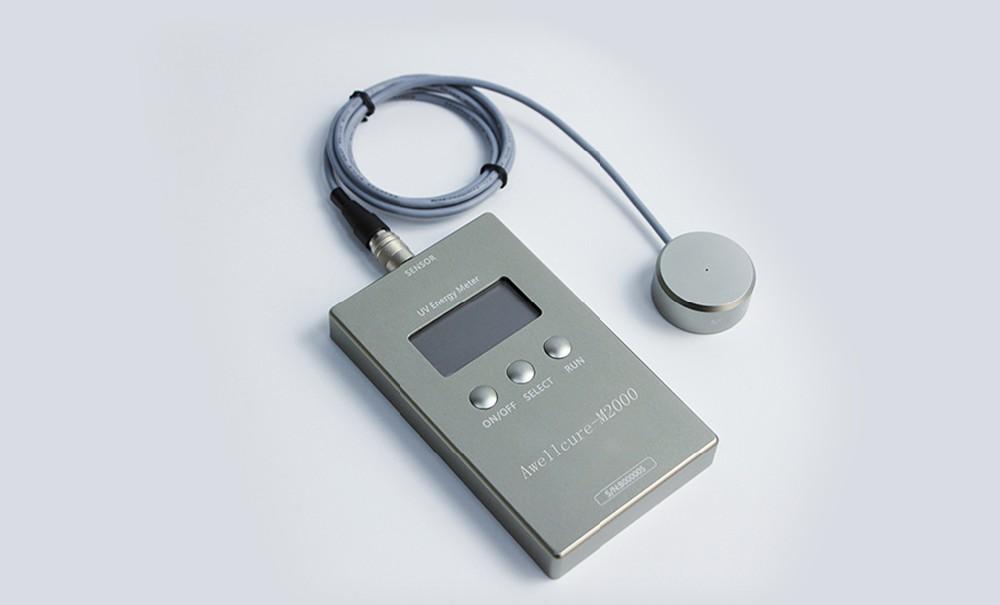
The ring LED lamp, with an irradiation area from Φ25 to Φ50 mm and water cooling, cures around fibres and cylindrical parts. The UV LED Spot systems tack lenses and fibres in modules from up to eight independent heads. The compact UV LED Linear sources and the 20 × 80 mm UV LED Area source cover fibre arrays and narrow bond lines, and a UV Curing Oven handles batch post-curing. Keep the process documented with a UV Radiometer.