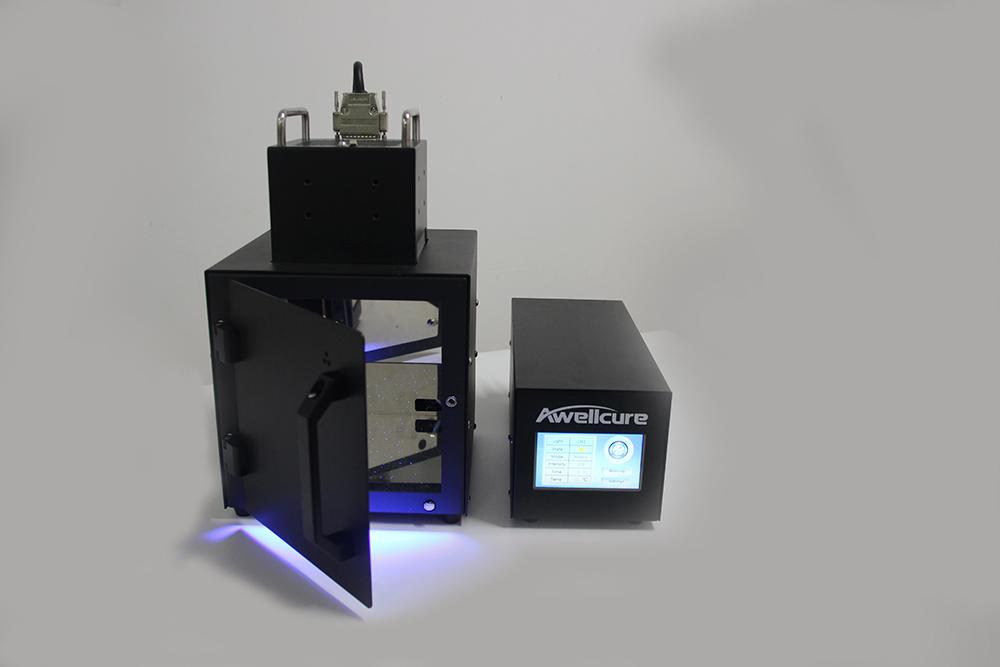
Many single-use and reusable medical devices are assembled with UV-curable adhesives. Plastic tubes, connectors, needles and housings are joined in seconds, at room temperature, and the bond can be inspected straight away. UV LED curing systems provide the light for this step in the manufacturing process; they have no function in the finished device.
What is cured
- Catheters and tubing sets: bonding tubes to connectors, luer fittings, hubs and Y-pieces, for example in infusion and extension sets.
- Needles and syringes: bonding cannulas into hubs and assembling syringe components.
- Masks and respiratory parts: joining mask bodies, valves, cushions and tubing connectors.
- Housings and enclosures: sealing and bonding plastic housings of handheld and electronic devices, and potting electronic components inside them.
- Optical and sensor parts: bonding lenses, windows and sensor elements, for example in endoscopes and diagnostic instruments.
- Hearing aids and small assemblies: bonding and sealing miniature components and shells.
- Surface coatings: curing UV-curable coatings on device parts.
Why UV LED suits device assembly
Heat-sensitive plastics. Device parts are often made of PVC, polycarbonate, ABS or other thermoplastics that soften or deform when heated. UV LEDs emit no infrared, so the parts see far less radiant heat than under a mercury lamp.
Short, defined cycles. Adhesives cure in seconds on demand, so parts can be handled, inspected and tested immediately. Exposure starts on a foot switch or a PLC signal and stops after the programmed time.
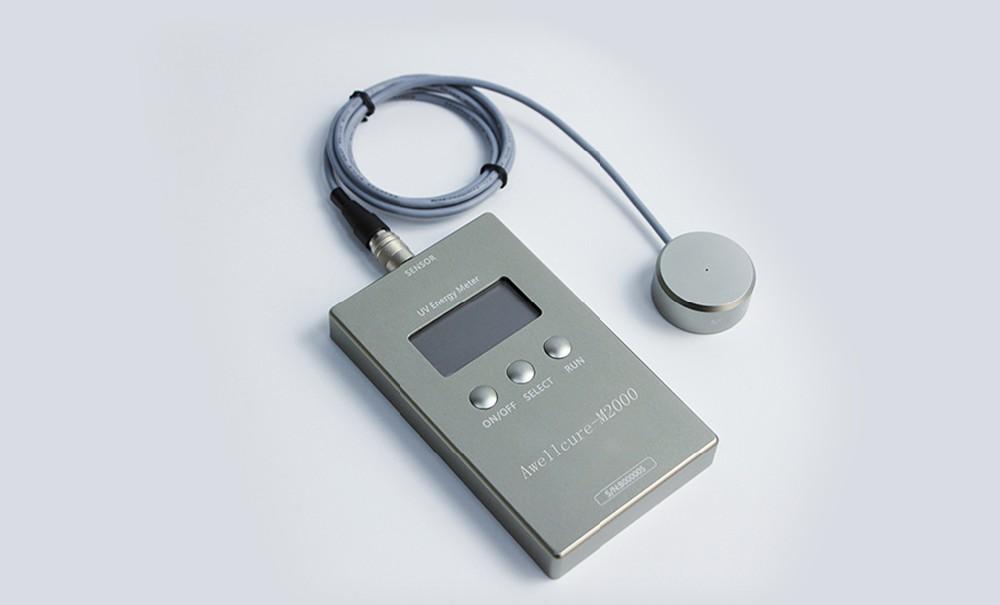
A process you can document. Device manufacturers have to show that every part was cured under the validated conditions. LED output is stable from shot to shot and declines only slowly, and controllers can lock parameters, log operating hours and raise an alarm if a head fails. A radiometer records the irradiance at the part.
Clean-room friendly. LED sources produce no ozone, need no exhaust and switch on without warm-up, which makes them easy to use in clean rooms and assembly cells.
Choosing a system
- Adhesive first. The adhesive is part of your device design and validation, so choose it before the light source. Its data sheet gives the curing wavelength, the minimum irradiance and the dose.
- Wavelength and material. Many medical adhesives cure at 365 nm, and some are formulated for 385 to 405 nm. Polycarbonate and UV-stabilised plastics absorb shorter UV-A wavelengths, so curing through them may need a longer wavelength.
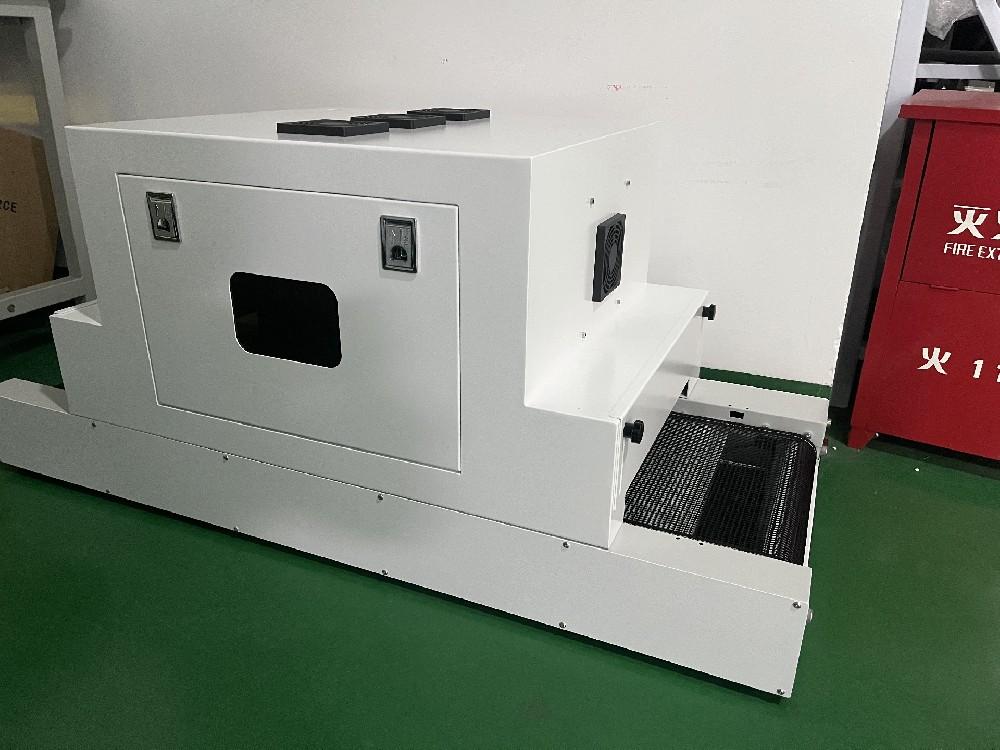
- Geometry. A bond between a tube and a connector suits a spot head or, for even exposure all around, a ring LED lamp. Trays of parts suit an area source, a conveyor or an oven.
- Validation support. Look for parameter lock, external triggering, alarm outputs and per-head operating hours, and plan for a radiometer to verify irradiance at regular intervals.
- Operator safety. Shield the curing zone or provide UV-blocking eyewear, especially for open spot and area stations.
Recommended systems
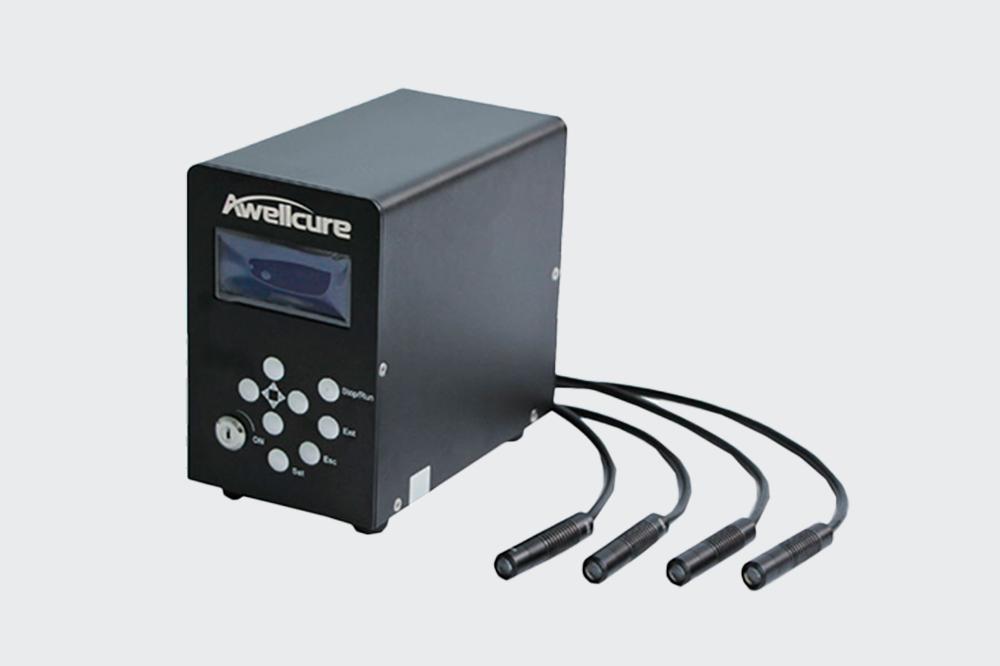
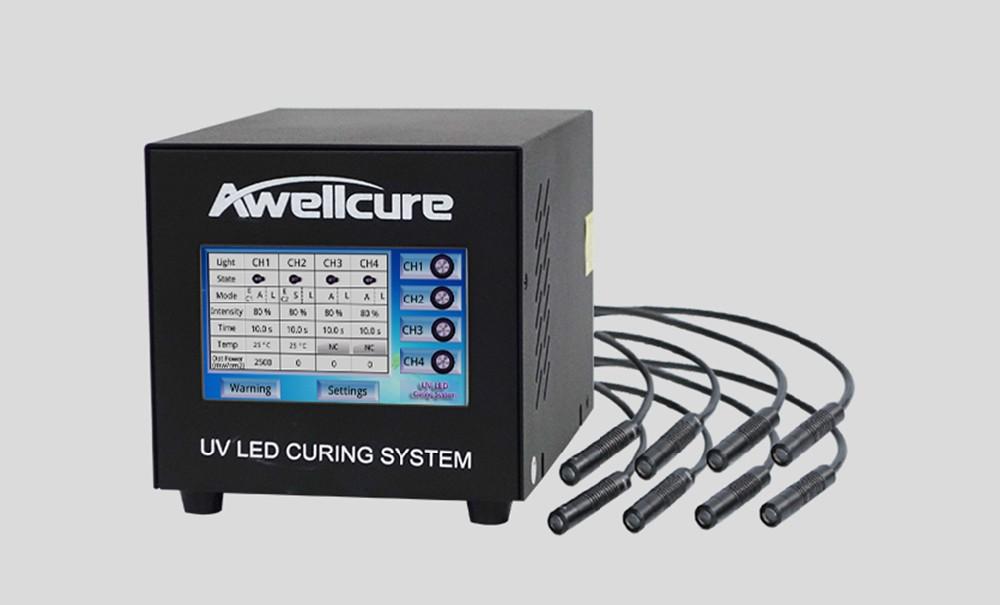
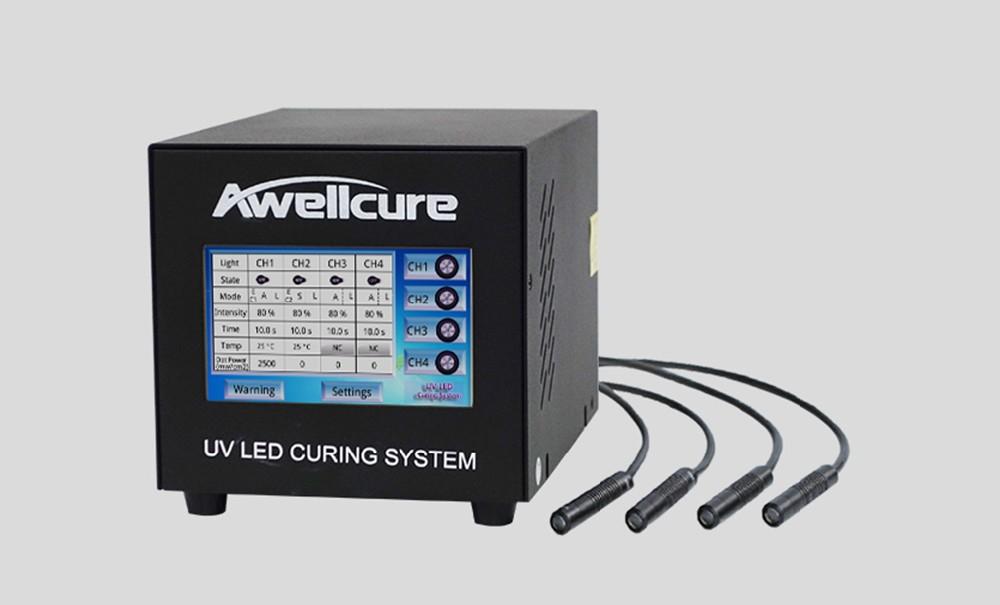
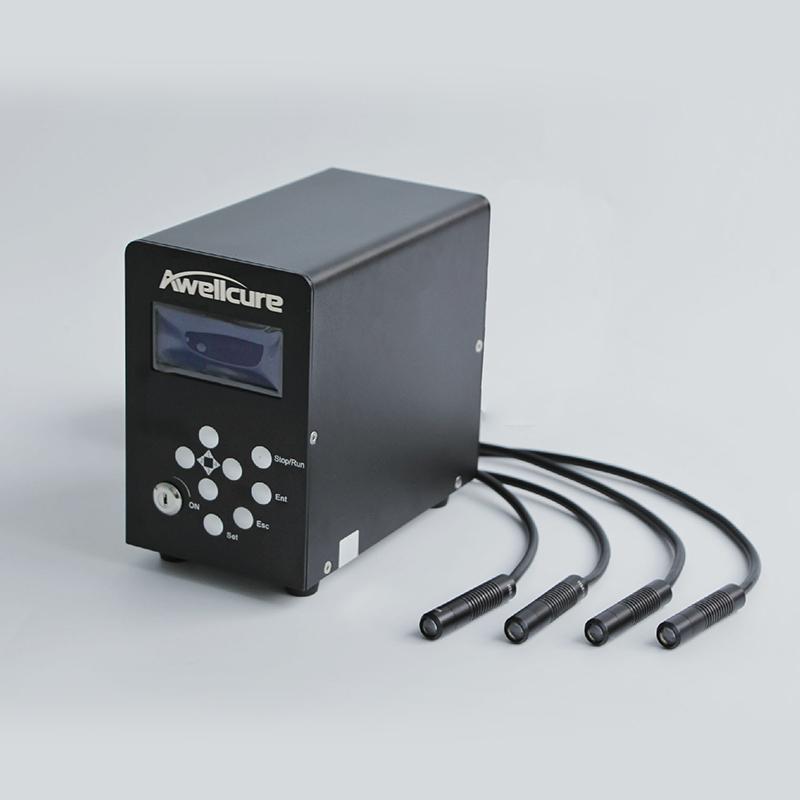
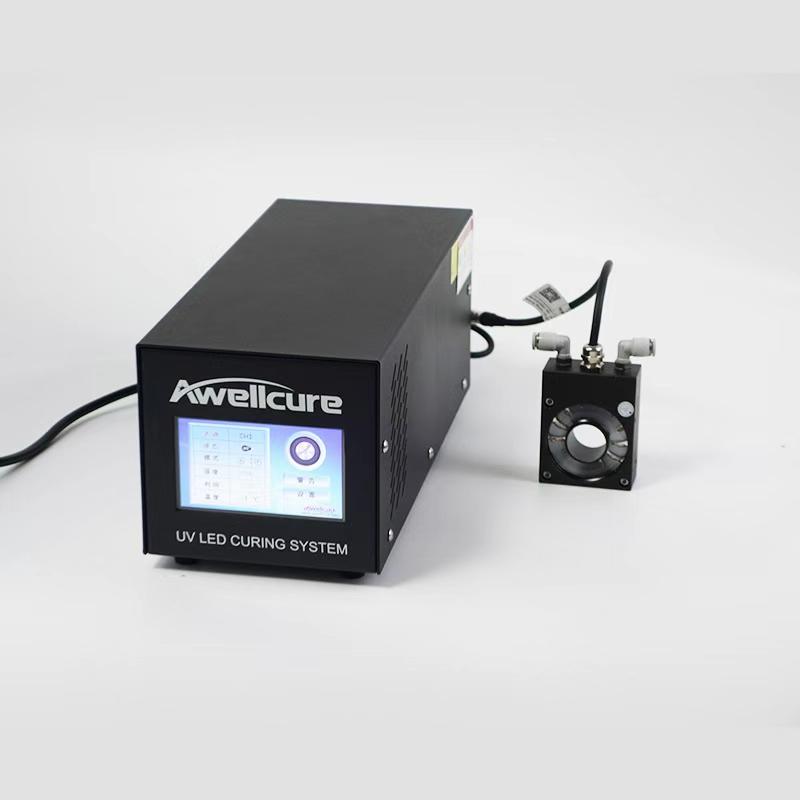
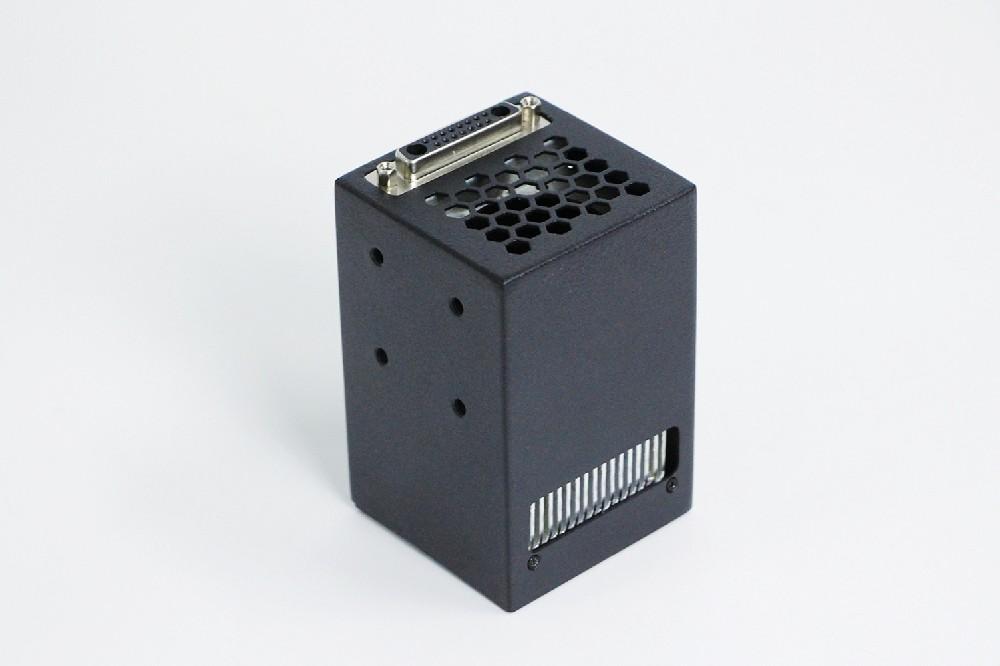
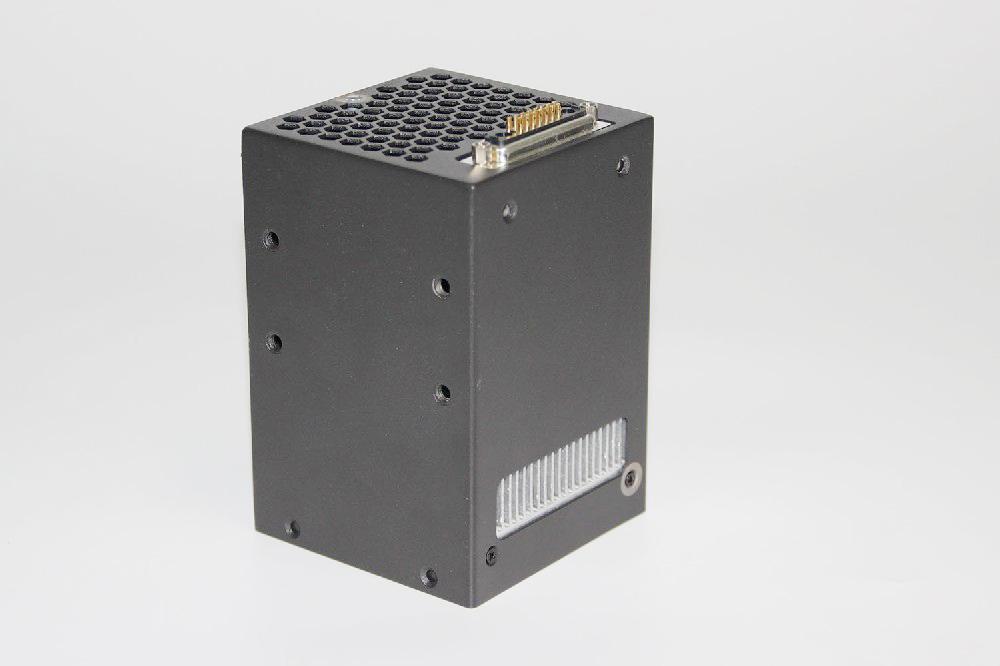
The UV LED Spot systems cure up to eight bond points from one controller, with spots from 2 to 15 mm. The ring LED lamp cures round joints evenly without rotating the part. UV LED Area sources, the desktop UV Conveyor and the UV Curing Ovens handle larger parts and batches, and a UV Radiometer documents the process.
Awellcure supplies the curing equipment. The choice of adhesive, the process validation and any regulatory approval of the device remain with the device manufacturer.